
Battery Technologies & Selection
We provide a full range of lithium battery chemistries engineered for portable devices, industrial equipment, medical instruments, outdoor systems, and smart electronics. Each chemistry offers unique electrical behavior, environmental tolerance, and safety characteristics. Choosing the right one directly impacts lifetime, reliability, and cost. This guide helps you evaluate and compare Lithium-ion (Li-ion), Lithium Polymer (LiPo), LiFePO4, and Sodium-ion (Na-ion) technologies including their strengths, limitations, and recommended use cases so you can choose the optimal chemistry and configuration for your application. Engineers typically evaluate chemistry based on voltage platform, energy density, discharge capability, environmental tolerance, safety profile, and long-term lifecycle cost. This guide distills these criteria for faster and more accurate selection.
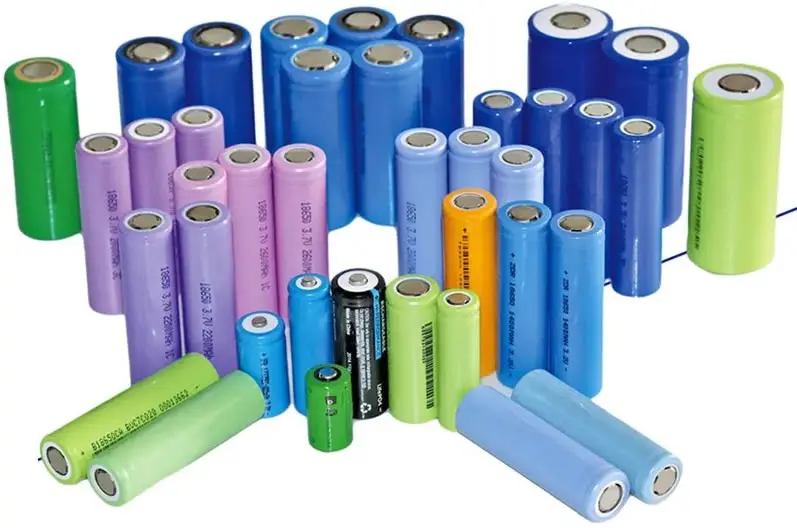
Lithium Ion Battery
Lithium-ion (Li-ion) batteries are high-energy-density rechargeable cells widely used in portable electronics and industrial devices. They use graphite or other carbon materials as the negative electrode and lithium-metal-oxide compounds as the positive electrode. Li-ion provides an excellent balance between capacity, size, cost, and maturity of supply chain.
Key Advantages
High gravimetric and volumetric energy density
Stable performance and cost-effective
Mature, widely available in many cylindrical/prismatic form factors
Good cycle life under controlled conditions
Limitations
Requires strict safety and protection management
Reduced performance in low-temperature environments
Limited shape flexibility compared to LiPo
Typical Applications
Consumer electronics, Industrial instruments, Handheld terminals, Wearables
Lithium Polymer Battery
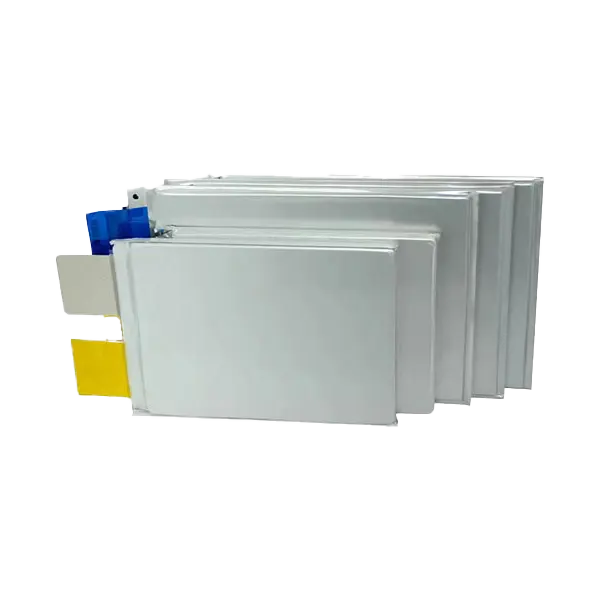
Lithium polymer batteries (LiPo) use lithium-ion chemistry with a polymer electrolyte, enabling ultra-slim, lightweight, or irregularly shaped pouch cells. Ideal for compact, lightweight, or uniquely shaped devices.
Key Advantages
Ultra-thin and highly customizable shapes
Lightweight with excellent energy density
High discharge rate options available
Flexible mechanical design for compact devices
Limitations
Higher cost than cylindrical Li-ion
Requires careful protection and charging management
Slightly lower mechanical robustness compared to cylindrical Li-ion
Typical Applications
Wearables, Smart devices, IoT, UAV, Compact handheld equipment
Lithium Iron Phosphate Battery
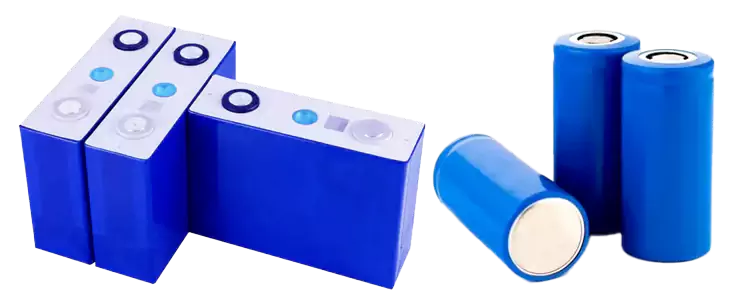
LiFePO4 (Lithium Iron Phosphate) uses an iron-based cathode material that delivers exceptional safety, long cycle life, and strong thermal stability. Ideal for long-life outdoor, industrial, medical, and stationary energy storage applications.
Key Advantages
Excellent thermal and chemical stability
Ultra-long cycle life (2,000~4,000+ cycles) with slow capacity degradation over long-term operation
Exceptional safety; very low risk of thermal runaway
Wide operating temperature range
Limitations
Lower energy density compared to Li-ion and LiPo
Higher weight for the same capacity
Typical Applications
Energy storage, Medical, Industrial, Outdoor power, Backup systems
Sodium-Ion Battery
Sodium-ion (Na-ion) batteries are an emerging alternative using abundant sodium resources, unlike lithium-ion batteries that use lithium. They offer excellent safety, long cycle life (comparable to LFP), good low-temperature performance, and cost advantages due to material availability.
Key Advantages
Inherently safer chemistry, no lithium dendrite issue, excellent thermal stability
Superior low-temperature capacity retention (90%@-20°C, 80%@-40°C)
3,000 ~ 6,000+ cycle life
Strong cost and supply-chain stability
Limitations
Lower energy density (~100~160 Wh/kg)
Heavier than lithium-based chemistries
Typical Applications
Residential & Grid-Scale ESS, Light Electric Vehicles, Backup Power (UPS), Renewable Energy Storage
Technical Comparison
| Items | Lithium Polymer | Lithium Ion (NMC) | LiFePO4 | Sodium-ion (Na-ion) | Lead acid | NiMH | NiCd |
| Nominal Voltage (V) | 3.7 | 3.6 | 3.2 | 3.0 | 2.0 | 1.2 | 1.2 |
| Work Voltage Range (V) | 3.0~4.2 | 2.75~4.2 | 2.0~3.65 | 1.5~4.0 | 1.8~2.4 | 1.0~1.4 | 1.0~1.4 |
| Energy Density (Wh/kg) | 220~260 | 170~220 | 110~145 | 100~160 | 30~50 | 60~120 | 40~80 |
| Energy Density (Wh/L) | 300~500 | 450~700 | 220~350 | 220~350 | 60~110 | 140~300 | 100~200 |
| Charge Rate (C-rate) | 0.5C~1C | 0.5C~1C | 0.5C~1C | 0.5C~1C | 0.1C~0.3C | 0.1C~1C | 0.2C~1C |
| Discharge Rate (C-rate) | 1C~40C | 1C~10C | 1C~3C | 1C~5C | 0.1C~1C | 0.5C~5C | 0.5C~10C |
| Charging Temp (°C) | 0~45 | 0/-20~45 | 0/-20~45 | 0~45 | 0~45 | 0~40 | 0~45 |
| Discharging Temp (°C) | -20/-40~60 | -20/-40~60 | -20/-40~60 | -40~60 | -20~50 | -20~50 | -20~50 |
| Cycle Life (Times) | 300~800 | 300~800 | 2000~4000 | 1500~3000 | 200~500 | 500~1000 | 1000~1500 |
| Safety | High | Medium | Very High | Very High | High | Medium | Medium |
| Shape Flexibility | Excellent | Cylindrical | Cylindrical/Prismatic | Cylindrical/Prismatic | None | Cylindrical | Cylindrical |
| Memory Effect | None | None | None | None | None | Low | High |
| Environmental | Good | Good | Excellent | Good | Poor | Moderate | Poor |
| Typical Applications | Smart device, portable | Consumer, industrial | ESS, outdoor, EV | ESS, EV | UPS, backup | Toys, tools | Aviation, military |