
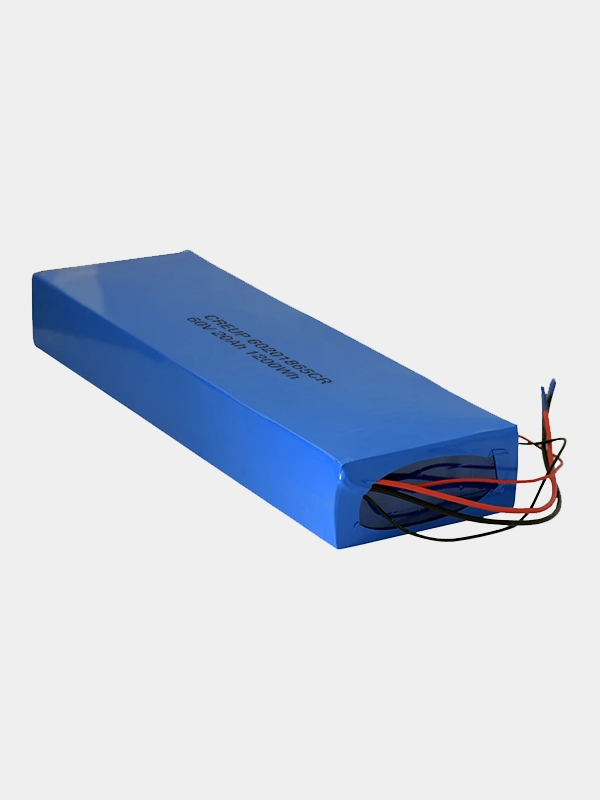
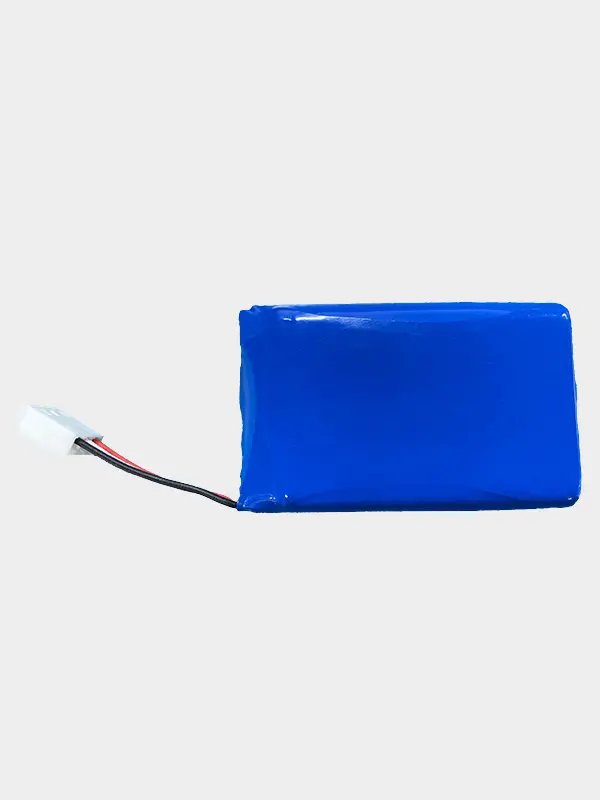
The lithium ion battery pack 6020186CR is a rechargeable 60V 20Ah 1200Wh power solution with an integrated battery management system. Designed for applications where every ounce and every inch counts, this 60V 20Ah power pack delivers robust 1200Wh energy in a remarkably compact and lightweight form factor. Whether you’re revolutionizing personal mobility, capturing breathtaking footage, or operating off the grid, it provides the reliable, high-density power you need to break free from limitations.
Features:
- Maximize Power, Minimize Footprint. Ideal for drones requiring longer flight times or compact electric vehicles where space is at a premium.
- High Voltage Efficiency. Delivers the punch needed to drive powerful motors in e-bikes, scooters, and industrial tools without the bulk.
- Built for Demanding Applications. Safely powers high-drain equipment like professional video lights, medical carts, or autonomous robots, with built-in protections.
- Ready When You Are. Hold a charge for months, making it perfect for seasonal equipment, emergency backup systems, or adventure gear you grab and go.
- Conquer Any Environment. From the chill of a high-altitude drone flight to the heat of an industrial workshop, perform reliably where others fail.
- Engineered with Responsibility. A clean, RoHS-compliant power source for environmentally conscious developers and brands.
Specifications:
- Name: Lithium ion battery pack
- Model: 6020186CR
- Configure: 16S8P
- Nominal Voltage: 60V
- Nominal Capacity: 20Ah
- Rated Energy: 1200Wh
- Charging Voltage: 67.2V max
- Charging Current: 10A max
- Charging Method: Constant Current/Constant Voltage (CC/CV)
- Discharging Current: 20A max continuous, 60A peak
- Discharging Cutoff Voltage: 48V
- Cell Type: A-grade li-ion cell
- PCM/BMS: Integrated BMS for protection against overcharge, overdischarge, overcurrent, short circuit, overheat, and cell balancing
- Housing: PVC shrink wrap
- Terminal: Customizable wire leads, connectors
- Dimensions: 435mm x 140mm x 60mm max
- Weight: 6.5kg approx.
- Environment Conditions: Charge: 0~45°C, Discharge: -20~60°C, Storage: -20~40°C, best 20±5°C for long time storage. Humidity: 85% max
- Modifications or custom designs available
Application Scenarios:
- High-Performance Drones & UAVs: Extend your flight operations for aerial mapping, inspection, or cinematography.
- Next-Generation E-Mobility: Power advanced e-bikes, scooters, and other compact electric vehicles with confidence.
- Professional Film & Photography Equipment: Run high-wattage cameras, monitors, and lights silently on location.
- Mobile Medical & Dental Equipment: Ensure reliable operation for portable diagnostic devices and mobile clinics.
- Robotics & Automation: Serve as the energy core for autonomous guided vehicles (AGVs), service robots, and automated machinery.
- Specialized Backup Power: Provide critical backup for telecommunications, security systems, or custom off-grid applications.
Charging & Safety Guidelines:
Always follow these guidelines for safe operation and maximum cycle life:
- Use only a charger compatible with the charging specifications of the battery.
- Charge at standard current rate for optimal cycle life; max current rate for faster charging.
- Never charge above the maximum charging voltage to avoid overcharge.
- Do not discharge below the discharging cutoff voltage to avoid overdischarge and prevent permanent damage.
- Do not discharge above the current rating. Exceeding these limits may trigger BMS protection or cause permanent damage to the battery cells.
- Operate the battery within the specified environmental conditions (temperature, humidity, and ventilation).
- Keep the battery away from fire, open flames, radiators, and other heat sources.
- Do not expose the battery to direct sunlight for extended periods during operation.
- Store at 20±5°C for extended periods to maximize longevity. Keep humidity below 85% during storage.
- Do not disassemble, puncture, or expose to fire.
Shipping & Handling Instructions:
To ensure safe transport and compliance with international regulations, please note the following:
- The battery can be shipped by air, sea, and ground transport — subject to applicable dangerous goods regulations for lithium batteries.
- UN38.3 Compliant — The battery has been tested and certified in accordance with UN38.3 for safe air and sea transport.
- Package Properly — Use only UN-certified packaging for lithium batteries. Ensure terminals are protected against short circuits and pack securely to prevent movement during transit.
- State of Charge (SoC) — For transport, maintain the battery at ≤30% state of charge as required by IATA and IMDG regulations.
- Labeling — Packages must display the appropriate lithium battery handling labels and include emergency contact information.
- Documentation — Ensure the shipping declaration includes the proper UN number (e.g., UN3480 for lithium-ion batteries) and your dangerous goods transport documents.
- Prohibited Shipments — Damaged, defective, or recalled batteries are strictly prohibited from transport.
Storage & Long-Term Maintenance:
To ensure maximum service life and maintain optimal cell health, please follow these guidelines for extended storage:
- Optimal Temperature — Store the battery at a stable temperature between 15°C and 25°C (ideal: 20±5°C). Avoid exposure to extreme heat, direct sunlight, or freezing conditions.
- Recommended Humidity — Keep storage environment humidity below 85% to prevent moisture ingress and potential damage to the battery cells and BMS components.
- Partial Charge for Storage — For extended storage (longer than 3 months), maintain the battery at approximately 50%–60% state of charge (around the nominal voltage). Do not store fully charged or fully depleted — both conditions accelerate capacity degradation.
- Periodic Maintenance Cycle — For batteries stored over six months or longer, perform at least one full charge/discharge cycle every six months to maintain cell health. This helps recalibrate the BMS, balance the cells, and prevent voltage drift that can lead to capacity loss.
- Inspect Before Use — Before returning a stored battery to service, inspect for any signs of swelling, leakage, or damage. If the battery voltage is below the discharging cutoff voltage, it has been over-discharged and should not be reused.
💡 Why cycle stored lithium batteries? Cells naturally self-discharge over time, and the built-in BMS circuit consumes a small amount of current even when idle. In multi-cell packs, slight variations in self-discharge rates between cells can gradually cause voltage imbalances. A maintenance cycle keeps the cells electrochemically active, balances the pack, and prevents capacity loss or degradation.
Reviews
There are no reviews yet.