
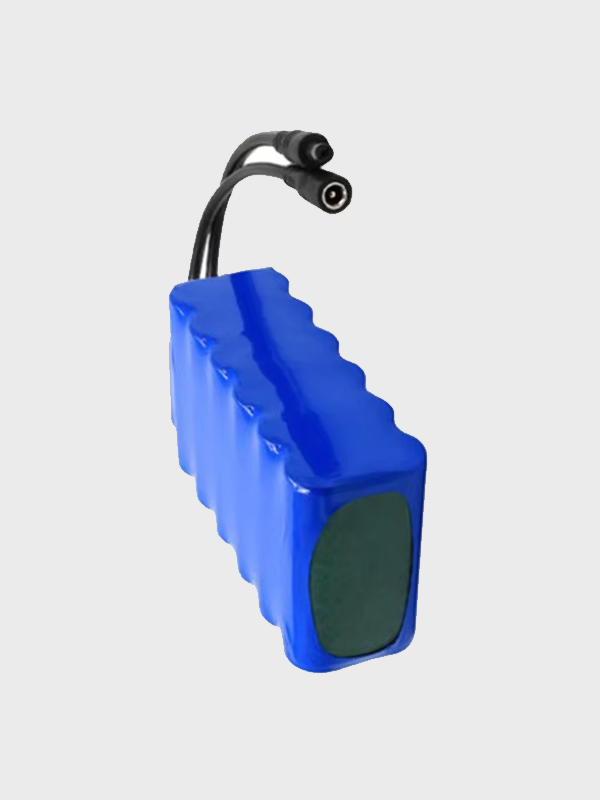
The 2210217CR lithium ion battery pack delivers a stable 22.2V 10Ah 222Wh in an exceptionally compact and lightweight form factor. Designed for applications where space, weight, and reliability are paramount, its versatile 24V platform offers broad compatibility across a wide range of commercial and consumer devices. The lightweight PVC shrink wrap housing provides a cost-effective and highly portable power solution.
Features:
- Universal 24V Compatibility. Perfectly suited for a vast array of low-power motor controllers, lab equipment, medical devices, and consumer electronics that operate on a standard 24V system.
- Compact & Lightweight Design. Its small footprint and low weight make it ideal for portable applications and space-constrained designs where every cubic centimeter counts.
- Robust & Reliable Performance. Engineered for durability with an integrated BMS providing protection against overcharge, over-discharge, short circuit, and overcurrent. Offers stable performance across a wide temperature range.
- Ready When You Are. Features a low self-discharge rate, holding its charge for extended periods. This makes it perfect for emergency backup systems, seasonal use equipment, or devices that need to be always ready.
- Cost-Effective Power. The PVC sleeve housing offers a reliable and economical solution without sacrificing essential safety features, providing excellent value for a wide range of applications.
Specifications:
- Name: Lithium ion battery pack
- Model: 2210217CR
- Configure: 6S2P
- Nominal Voltage: 22.2V
- Nominal Capacity: 10Ah
- Rated Energy: 222Wh
- Charging Voltage: 25.2V max
- Charging Current: 5A max
- Charging Method: Constant Current/Constant Voltage (CC/CV)
- Discharging Current: 10A max continuous, 35A peak
- Discharging Cutoff Voltage: 18V
- Cell Type: A-grade NCM li-ion cell
- PCM/BMS: Integrated BMS for protection against overcharge, overdischarge, overcurrent, short circuit, overheat, and cell balancing
- Housing: PVC shrink wrap
- Terminal: Customizable wire leads, connectors
- Dimensions: 135mm x 80mm x 45mm max
- Weight: 1.0kg approx.
- Environment Conditions: Charge: 0~45°C, Discharge: -20~60°C, Storage: -20~40°C, best 20±5°C for long time storage. Humidity: 85% max
- Modifications or custom designs available
Application Scenarios:
- Portable Medical & Dental Equipment: Power mobile diagnostic devices, dental tools, and patient monitors where reliability and size are critical.
- Lab & Test Equipment: Provide clean, stable power for benchtop electronics, oscilloscopes, sensors, and experimental setups.
- Professional Photography & Video: Run portable studio lights, monitors, and camera rigs silently on location without bulky power supplies.
- Hobbyist & Educational Robotics: The ideal energy source for smaller AGVs, robotic arms, and university competition robots.
- Security & Communication Devices: Keep access control systems, emergency radios, and network devices mobile running or as backup power.
- Mobility Aids: Power smaller electric wheelchairs or mobility scooters with a compact and lightweight design.
Charging & Safety Guidelines:
Always follow these guidelines for safe operation and maximum cycle life:
- Use only a charger compatible with the charging specifications of the battery.
- Charge at standard current rate for optimal cycle life; max current rate for faster charging.
- Never charge above the maximum charging voltage to avoid overcharge.
- Do not discharge below the discharging cutoff voltage to avoid overdischarge and prevent permanent damage.
- Do not discharge above the current rating. Exceeding these limits may trigger BMS protection or cause permanent damage to the battery cells.
- Operate the battery within the specified environmental conditions (temperature, humidity, and ventilation).
- Keep the battery away from fire, open flames, radiators, and other heat sources.
- Do not expose the battery to direct sunlight for extended periods during operation.
- Store at 20±5°C for extended periods to maximize longevity. Keep humidity below 85% during storage.
- Do not disassemble, puncture, or expose to fire.
Shipping & Handling Instructions:
To ensure safe transport and compliance with international regulations, please note the following:
- The battery can be shipped by air, sea, and ground transport — subject to applicable dangerous goods regulations for lithium batteries.
- UN38.3 Compliant — The battery has been tested and certified in accordance with UN38.3 for safe air and sea transport.
- Package Properly — Use only UN-certified packaging for lithium batteries. Ensure terminals are protected against short circuits and pack securely to prevent movement during transit.
- State of Charge (SoC) — For transport, maintain the battery at ≤30% state of charge as required by IATA and IMDG regulations.
- Labeling — Packages must display the appropriate lithium battery handling labels and include emergency contact information.
- Documentation — Ensure the shipping declaration includes the proper UN number (e.g., UN3480 for lithium-ion batteries) and your dangerous goods transport documents.
- Prohibited Shipments — Damaged, defective, or recalled batteries are strictly prohibited from transport.
Storage & Long-Term Maintenance:
To ensure maximum service life and maintain optimal cell health, please follow these guidelines for extended storage:
- Optimal Temperature — Store the battery at a stable temperature between 15°C and 25°C (ideal: 20±5°C). Avoid exposure to extreme heat, direct sunlight, or freezing conditions.
- Recommended Humidity — Keep storage environment humidity below 85% to prevent moisture ingress and potential damage to the battery cells and BMS components.
- Partial Charge for Storage — For extended storage (longer than 3 months), maintain the battery at approximately 50%–60% state of charge (around the nominal voltage). Do not store fully charged or fully depleted — both conditions accelerate capacity degradation.
- Periodic Maintenance Cycle — For batteries stored over six months or longer, perform at least one full charge/discharge cycle every six months to maintain cell health. This helps recalibrate the BMS, balance the cells, and prevent voltage drift that can lead to capacity loss.
- Inspect Before Use — Before returning a stored battery to service, inspect for any signs of swelling, leakage, or damage. If the battery voltage is below the discharging cutoff voltage, it has been over-discharged and should not be reused.
💡 Why cycle stored lithium batteries? Cells naturally self-discharge over time, and the built-in BMS circuit consumes a small amount of current even when idle. In multi-cell packs, slight variations in self-discharge rates between cells can gradually cause voltage imbalances. A maintenance cycle keeps the cells electrochemically active, balances the pack, and prevents capacity loss or degradation.
Reviews
There are no reviews yet.