
Sodium Ion / Na-ion Cells
Features
- Very safe. Less prone to thermal runaway and overheating than li-ion, enhances the safety profile.
- Abundance and low cost: Sodium is one of the most abundant elements on Earth.
- Better lower temperature performances vs li-ion, suitable for applications in colder climates.
- More environmentally friendly, lower environmental impact and easier to recycle.
- Super long cycle life. more than 3000 cycles, similar to lifepo4 battery.
- Lower energy density: Sodium-ion batteries typically have a lower energy density than li-ion.
- Suit for various applications, particularly where cost and safety are prioritized over energy density.
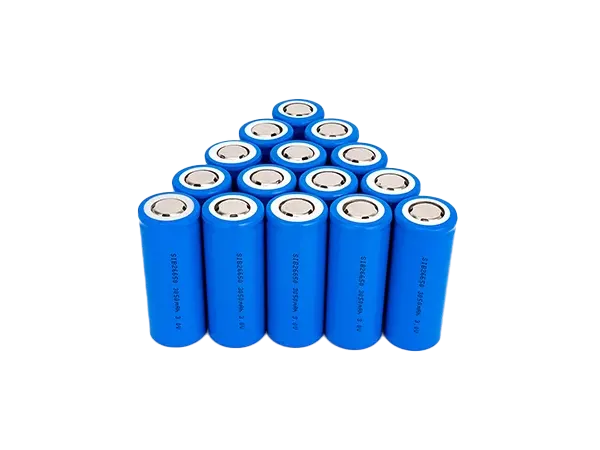
Applications
AGV/RGV/MGV automatic trucks, electric forklifts, electric stackers, fire fighting robots, robots, low-speed electric vehicles, special vehicles, testing equipment, security monitoring equipment, radio communication system, surveying instruments, UPS, emergency application, medical devices, traffic and navigation signal lamp, solar lighting, emergency lighting and car/ship starting system, power transmission and transformer station, household/commercial energy storage, etc.
Model List
| Model | Nominal Voltage (V) | Nominal Capacity (mAh) | Operation Voltage | Discharge C Rate | Charge/Discharge Temperature | Length (max, mm) | Diameter (max, mm) | Weight (approx, g) |
| 18650 | 3.0 | 1500 | 1.5V~4.0V | 3C | -10~45°C / -40~60°C | 65.7 | 18.7 | 40 |
| 26700 | 3.0 | 3500 | 1.5V~4.0V | 3C | -10~45°C / -40~60°C | 71.0 | 26.7 | 81 |